
 Reading Time: 6 minutes
 How to Sharpen Scissors With Salt (Plus an Easy Alternative)
This post may contain affiliate links. Read the disclosure.
We have all dealt with scissors that suddenly stop cutting the way they should. Instead of making a clean cut, dull blades can bend paper, snag fabric, or make a simple task more frustrating than it needs to be.
One easy trick is to open and close the scissors inside a container of coarse salt. Rock salt works best because the larger crystals give the blades more resistance.
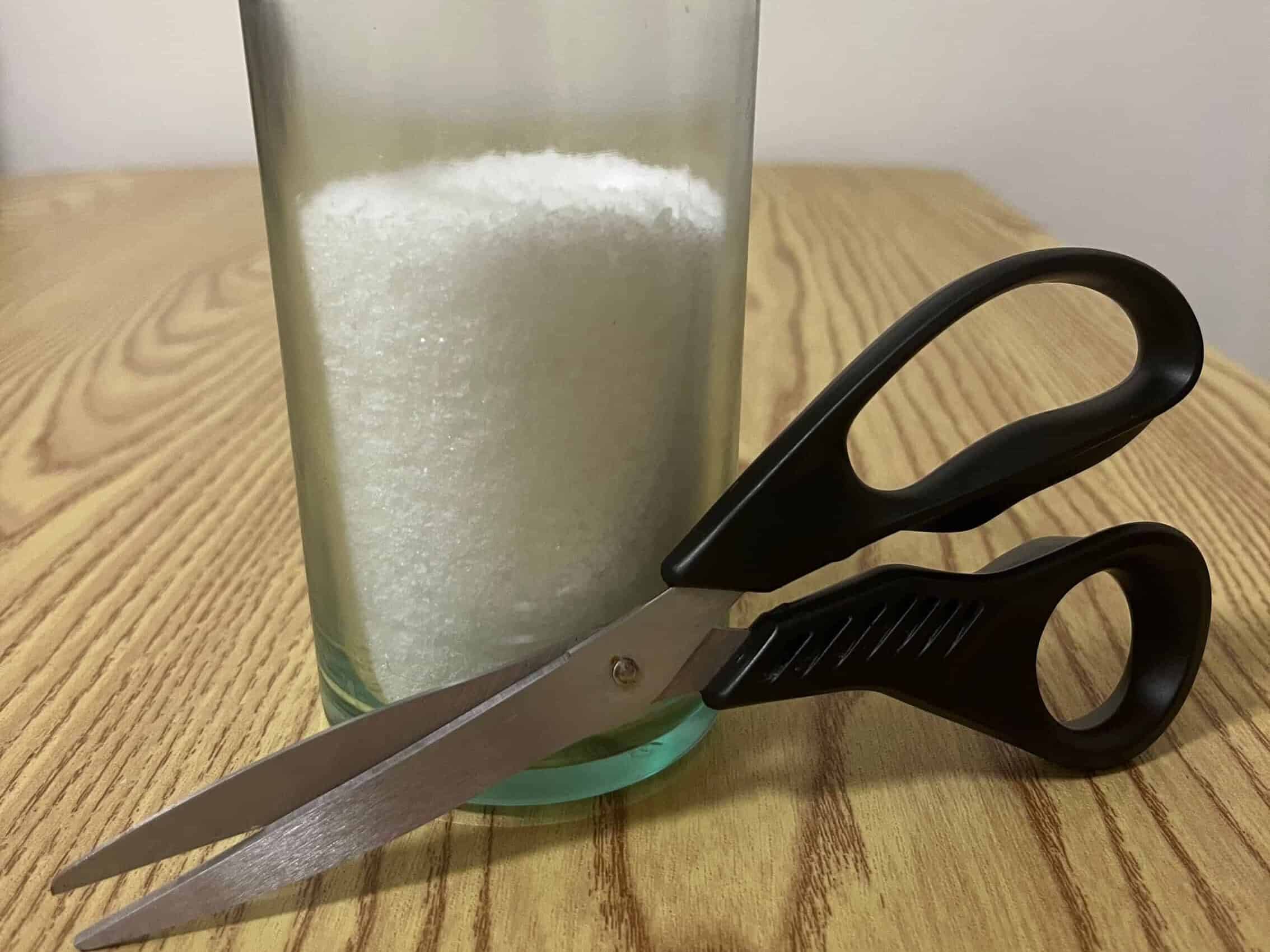
You can also use the neck of a sturdy glass bottle as an alternative way to lightly hone the edges.
This guide will show you how to sharpen scissors with salt step by step, clean the blades afterward, and test them safely. We will also explain how to try the glass bottle method if you do not have rock salt available.
If you enjoy finding more uses for simple household items, we also made a helpful list: 25 Salt Solutions That Will Help You Save Time and Money Around the House. It includes easy ways to use salt for cleaning, freshening, and solving everyday problems.
Now, let’s gather the materials and get started.
Table of Contents
Materials You Will Need
You only need a few simple items for this scissors-sharpening hack.
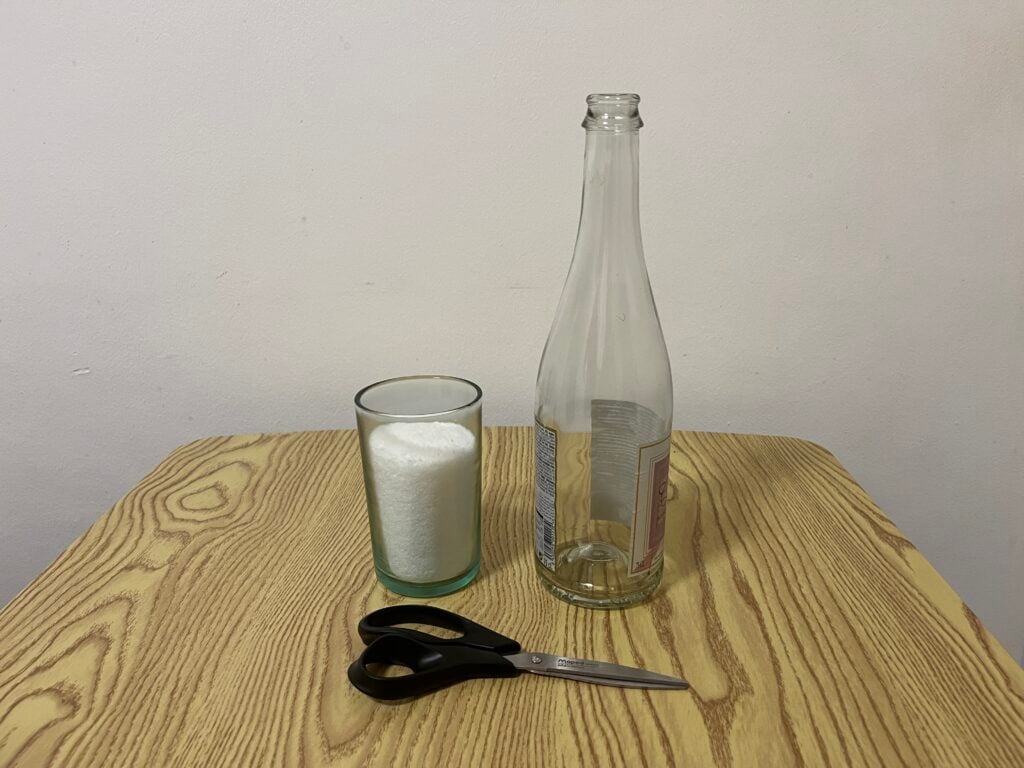
- Scissors: Use standard household scissors that feel slightly dull but are not bent, chipped, rusty, or loose at the joint.
- Rock salt: Coarse rock salt is preferred because the larger pieces create more resistance against the blades. Fine table salt may not work as well.
- Small container or glass: Choose a sturdy container or drinking glass that is deep enough to hold the salt and part of the scissor blades.
- Glass bottle: This is an optional alternative to the salt method. Use a thick, clean glass bottle with a smooth neck and no cracks or chips.
Once everything is ready, place the materials on a flat, stable surface before working with the scissors.
🙋♀️If you like what you are reading, then click like and subscribe to my newsletter. We share tips to waste less time and money.
How to Sharpen Scissors With Salt
This simple method uses coarse salt to create light resistance against the blades. It works best for scissors that are only a little dull, not blades that are chipped, bent, or badly damaged.
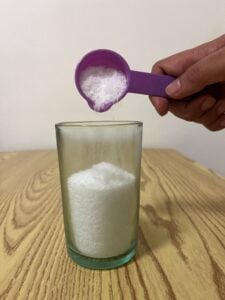
Step 1: Fill the Container With Salt
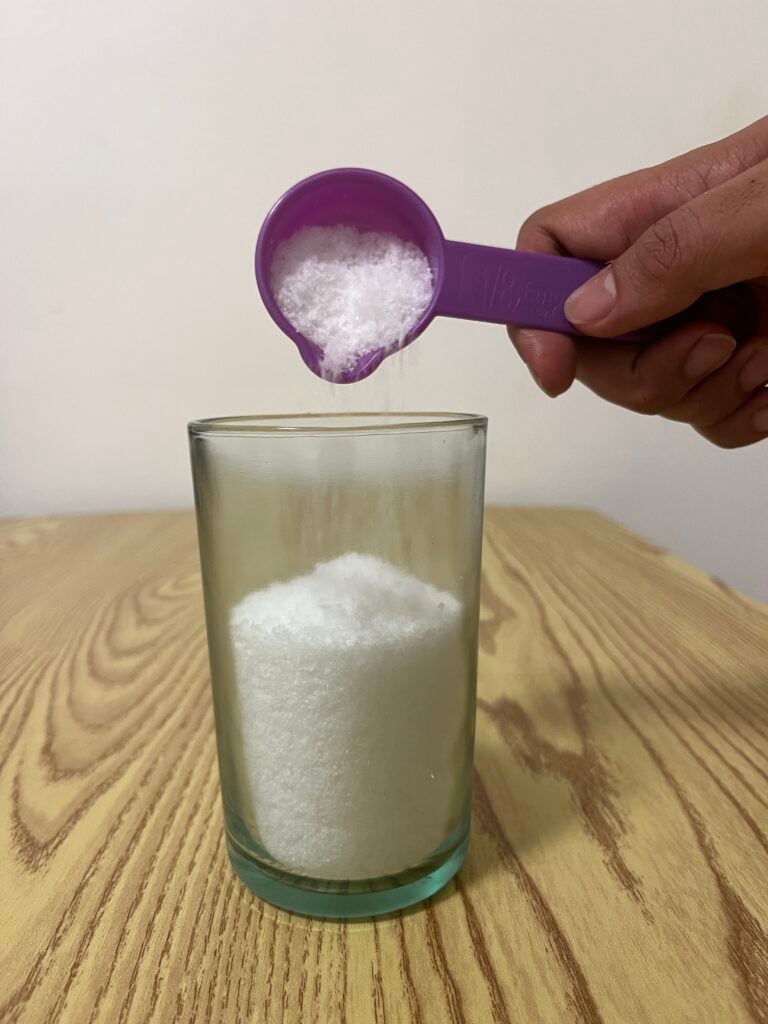
Pour rock salt into a small, sturdy container or glass. Add enough salt so you can place a good portion of the scissor blades inside without touching the bottom.
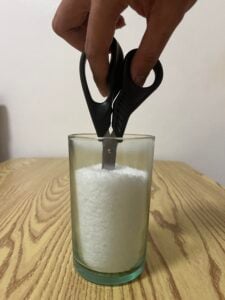
Step 2: Place the Scissors Into the Salt
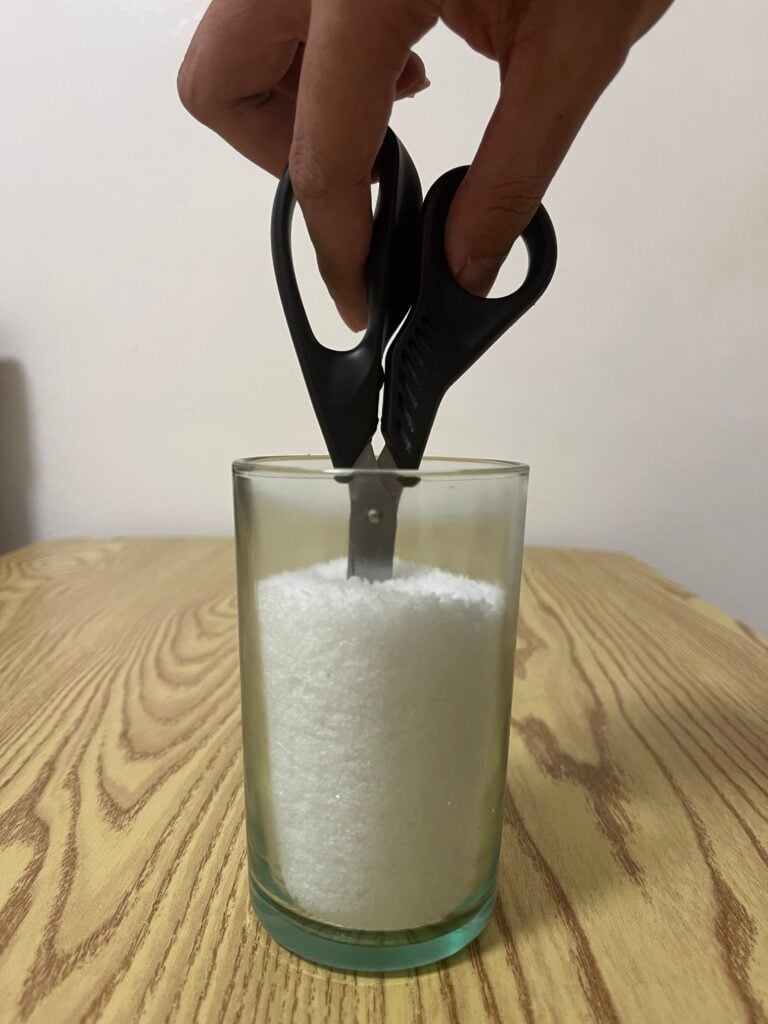
Open the scissors and carefully place the blades into the salt. Keep a firm grip on the handles and make sure your fingers stay away from the sharp edges.
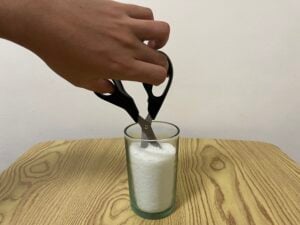
Step 3: Open and Close the Scissors
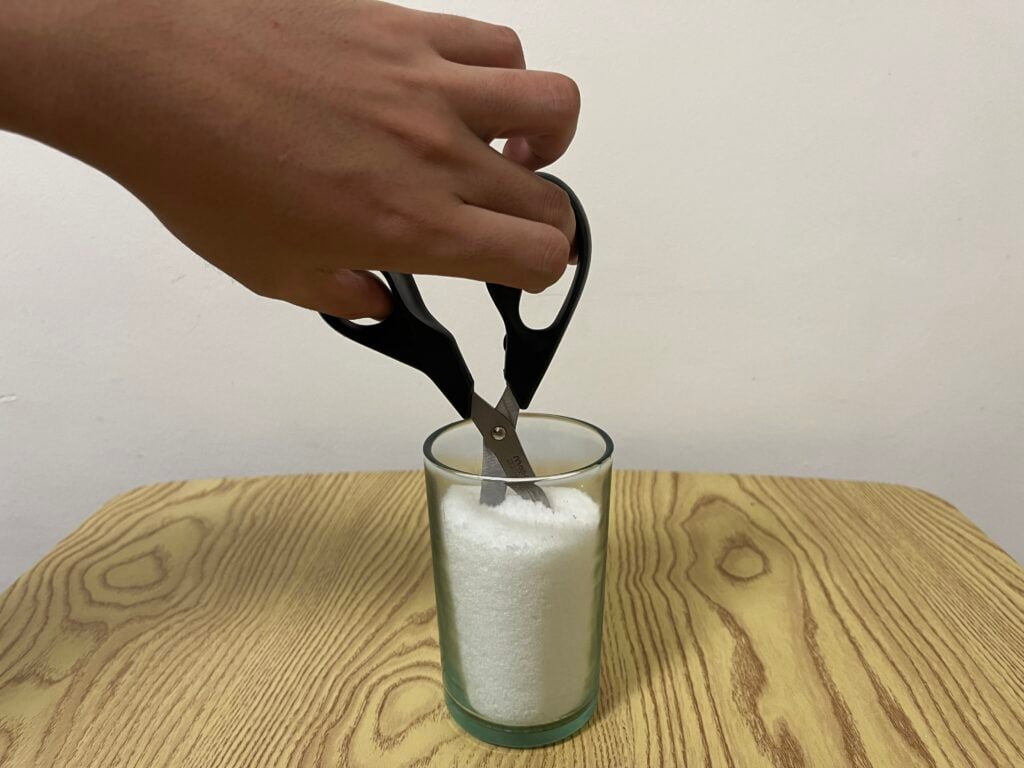
Slowly open and close the scissors inside the salt several times. Let the salt move between the blades, but do not force the scissors or squeeze too hard.
You can change the angle slightly as you work so different parts of the blades pass through the salt. A few slow, controlled movements should be enough to lightly hone the edges.
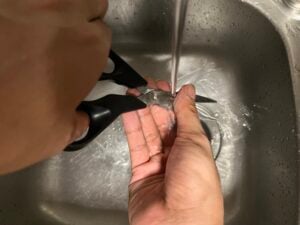
Step 4: Wash and Dry the Blades
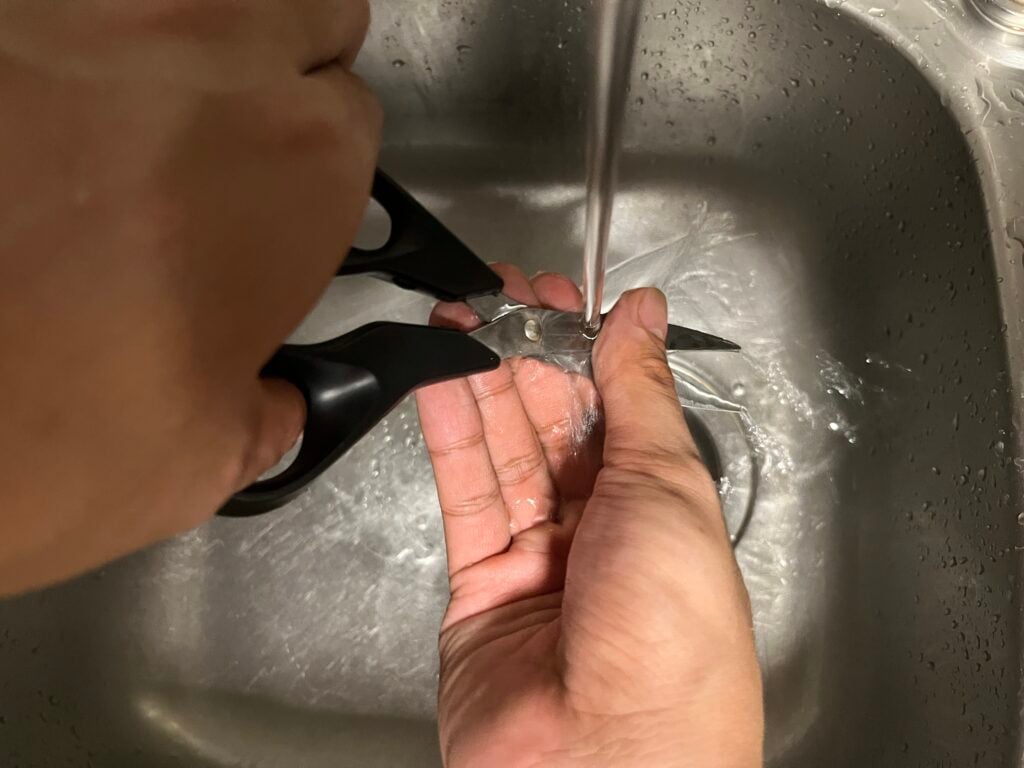
Rinse the scissor blades with clean water to wash away any salt stuck to the surface or near the joint. Wipe them dry right away with a clean cloth to help prevent rust.
Open and close the scissors a few times while drying them to make sure no salt or moisture remains between the blades.
Related: DIY Teak Cleaner: A Simple And Effective Recipe
We’ve turned our best tips into quick-read books, and we’re publishing new ones every week. See the full collection here: amazon.com/author/chachingqueen.
Alternative: How to Hone Scissors With a Glass Bottle
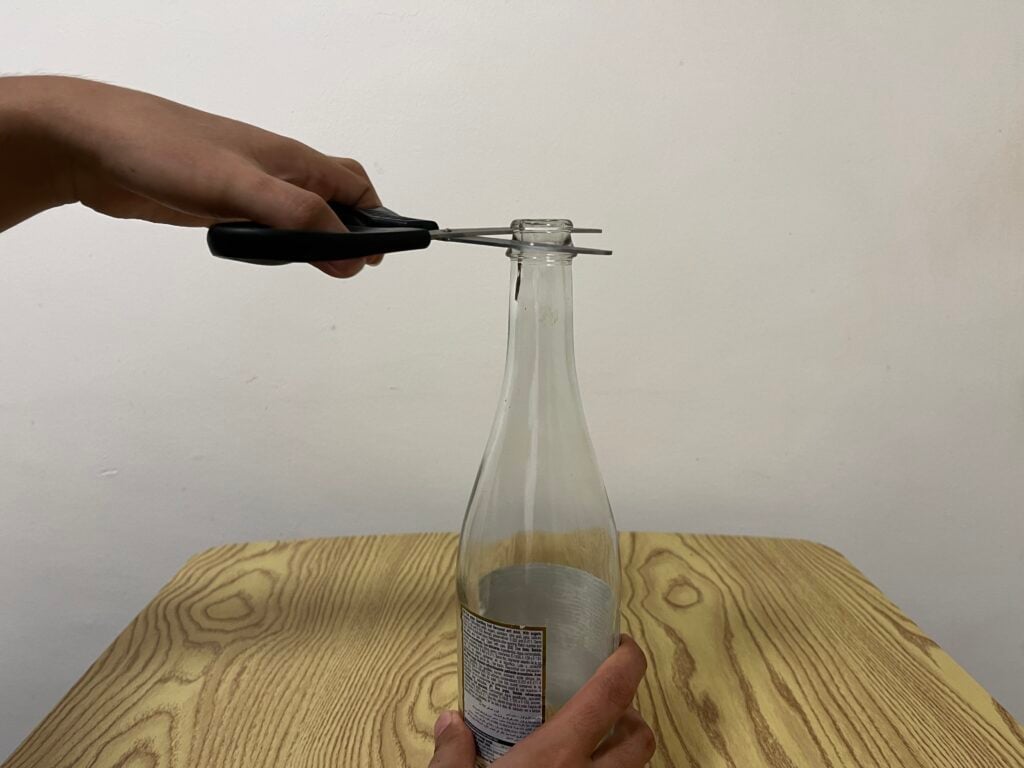
If you do not have rock salt, you can try using the smooth neck of a sturdy glass bottle instead. Choose a thick, clean bottle with no cracks or chips, then place it upright on a flat, stable surface.
Open the scissors and place the blades around the bottle neck as if you were trying to cut through it. Slowly open and close the scissors several times, using gentle and even pressure as the blades slide against the glass.
Do not squeeze too hard, since too much pressure could damage the blades or crack the bottle. Stop right away if the glass slips or feels unstable.
Once finished, wipe the blades with a clean, damp cloth and dry them completely before testing the scissors.
Related Video: Sharpen Dull Blender Blades With This Simple Rice Hack

Safety Tips for Sharpening Scissors at Home
These simple methods should always be done carefully. Keep the scissors under control, work on a steady surface, and stop if anything feels unsafe.
- Check the scissors first: Do not use these methods on scissors with chipped, bent, rusty, or loose blades.
- Use a stable surface: Place the salt container or glass bottle on a flat surface where it will not slide or tip.
- Do not squeeze the bottle: Use light pressure to reduce the risk of cracking or breaking the glass.
- Wash away all salt: Salt left on the blades or near the joint may lead to rust, so rinse and dry the scissors well.
- Test the scissors carefully: Try cutting scrap paper or fabric before using them for an important task.
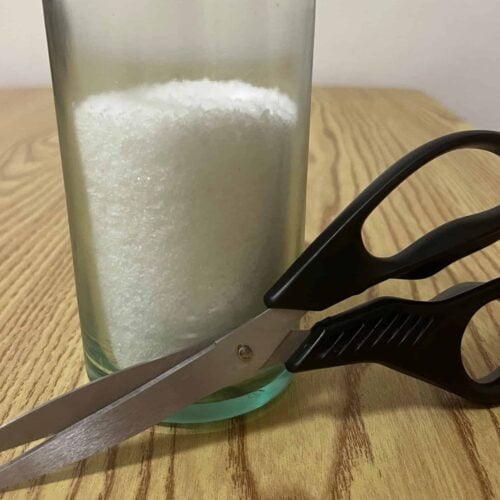
How to Sharpen Scissors With Salt (Plus an Easy Alternative)
Equipment
- Scissors
- Rock salt
- Small container or glass
- Glass bottle
Instructions
- Pour enough rock salt into a small, sturdy container or glass to cover part of the scissor blades.

- Open the scissors and carefully place the blades into the salt while keeping your fingers away from the edges.
- Slowly open and close the scissors several times inside the salt, using gentle and controlled movements.

- Rinse the blades with clean water, then wipe them dry right away with a clean cloth to help prevent rust.
Sharpen Dull Scissors With a Simple Salt Hack
Using rock salt can be a quick way to lightly hone scissors that are no longer cutting as cleanly as they should. The glass bottle method also gives you another option using an item you may already have at home.
These tricks work best for scissors that are only slightly dull. Scissors with damaged, chipped, or badly worn blades may need professional sharpening or replacement.
After using either method, wash or wipe the blades clean, dry them fully, and test them on a scrap material. With a little care, you may be able to make your scissors easier to use without buying a new pair.
🙋♀️If you like what you just read, then subscribe to my newsletter and follow us on YouTube.👈
- How to Easily Peel Garlic: Quick Kitchen Tip
- Rice to the Rescue: 24 Smart and Easy Household Hacks With Rice
- 20 Things You Should Never Clean with Dish Soap (and What Works Better)
- How to Clean a Handheld Vacuum Filter: Save Money by Skipping Replacements
- Stop Stressing! Complete Guide For Quick and Easy Spring Cleaning